01 / Problem
Job hunting is scattered, and AI help usually costs your data.
Job seekers, starting with the Philippines, deal with scattered job boards, generic CVs that ATS filters reject, and AI career tools that are paid, locked to one provider, or upload personal data to someone else's cloud.
Paid job apps also lose users the moment they work: people stop paying once they're hired. And the biggest boards, LinkedIn and Indeed, don't offer open APIs.
02 / Approach
Free, bring your own AI, and private by default.
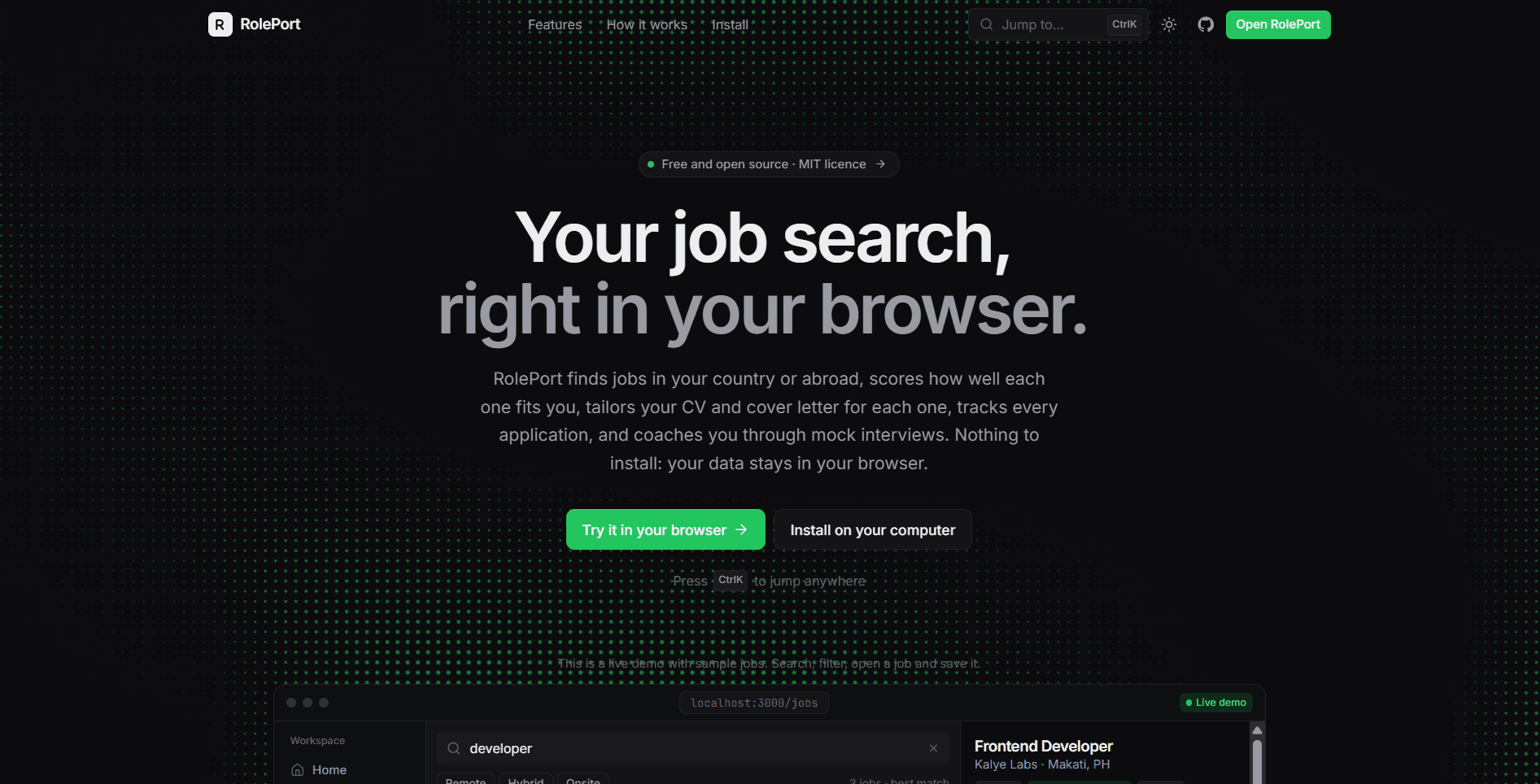
RolePort is open source with no subscriptions and no accounts. It works with Claude, OpenAI, OpenRouter, Groq, or a free local model through Ollama, so you pay the provider directly, or nothing at all.
Data lives in a database on your own computer, or in your browser in the Lite version. API keys are encrypted at rest and never sent back to the browser. Every prompt can be read and edited in Settings, and each page shows exactly what is sent to the model.
- 01Set your home country, target countries and work authorizations; overseas jobs are flagged "needs visa" instead of hidden
- 02Self-hosted with Docker Compose and PostgreSQL, or RolePort Lite running fully in the browser on PGlite
- 03One codebase builds both versions through a build-time mode flag
03 / Features
From search to offer in one place.
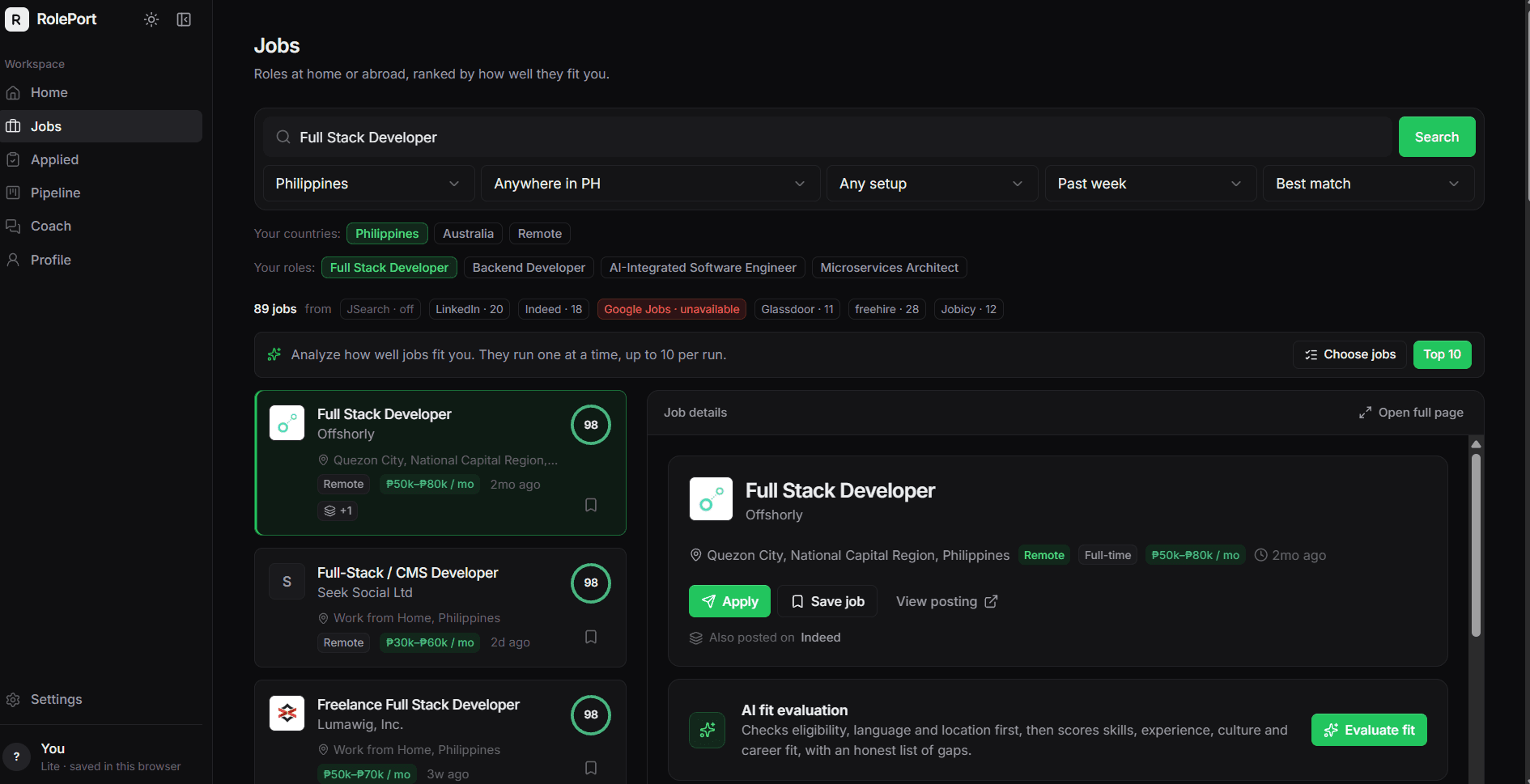
Search pulls from freehire, Jobicy, JSearch (JobStreet, Indeed, LinkedIn, Kalibrr) and an optional JobSpy service. The same opening posted on several boards shows up once, with links to all of them. An AI fit evaluation checks eligibility, language and location, then scores four dimensions and lists strengths, gaps and a recommendation.
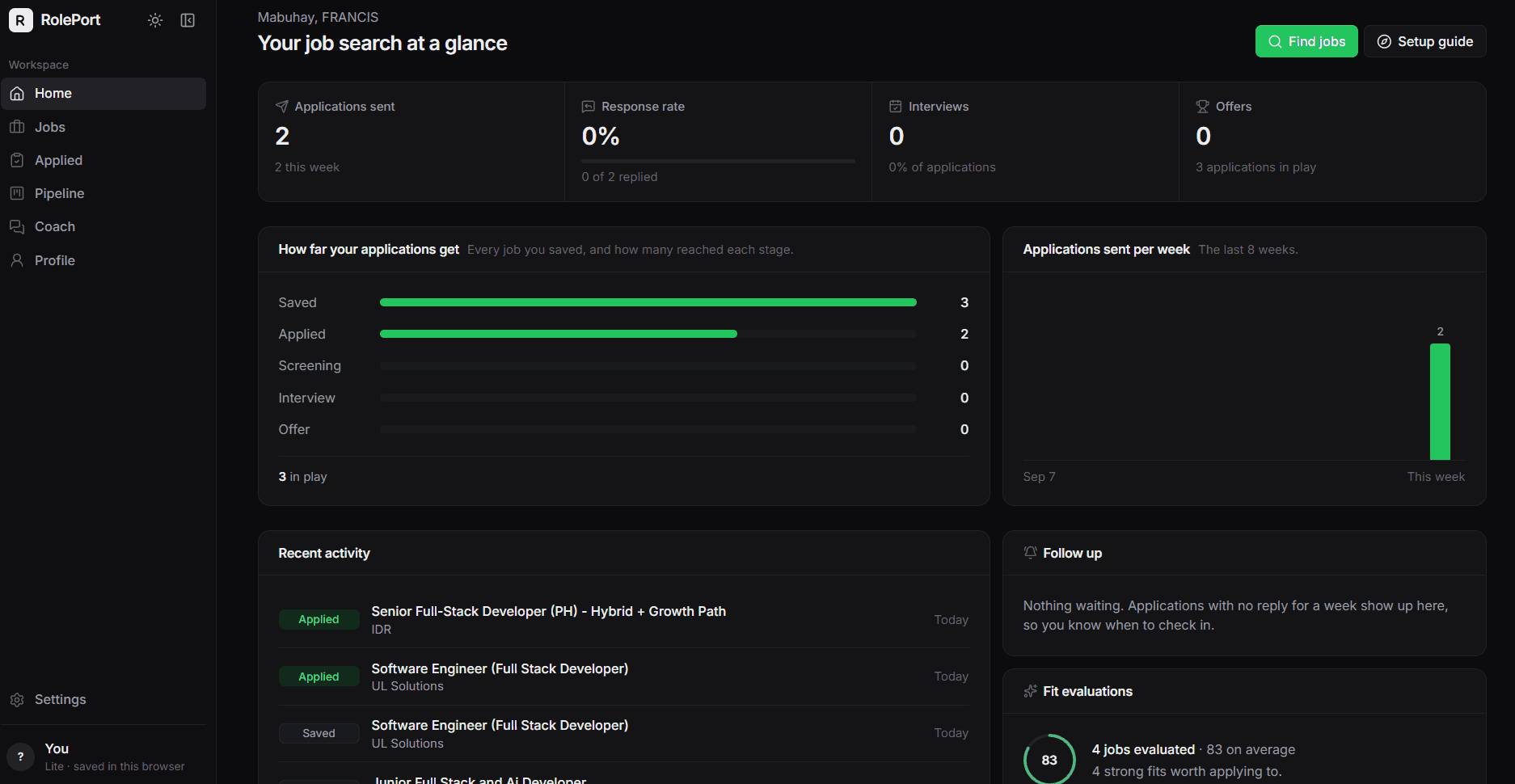
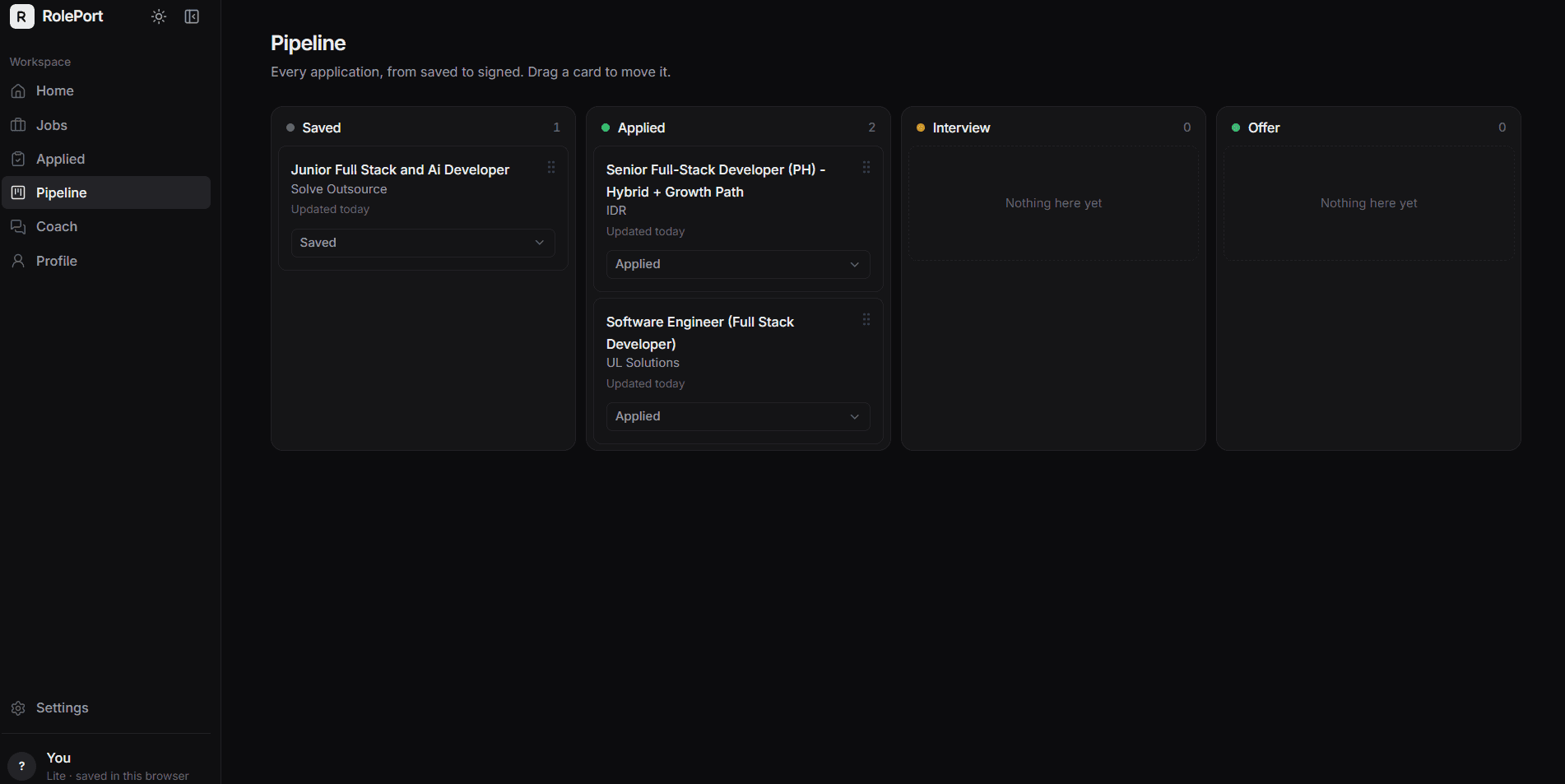
Jobs move through a Saved → Applied → Interview → Offer pipeline, with a dashboard for response rate, weekly pace and follow-ups due. CVs and cover letters are tailored per job and exported as ATS-friendly PDFs.
- 01CV tailoring that rewrites only wording, with facts pulled from your profile in code
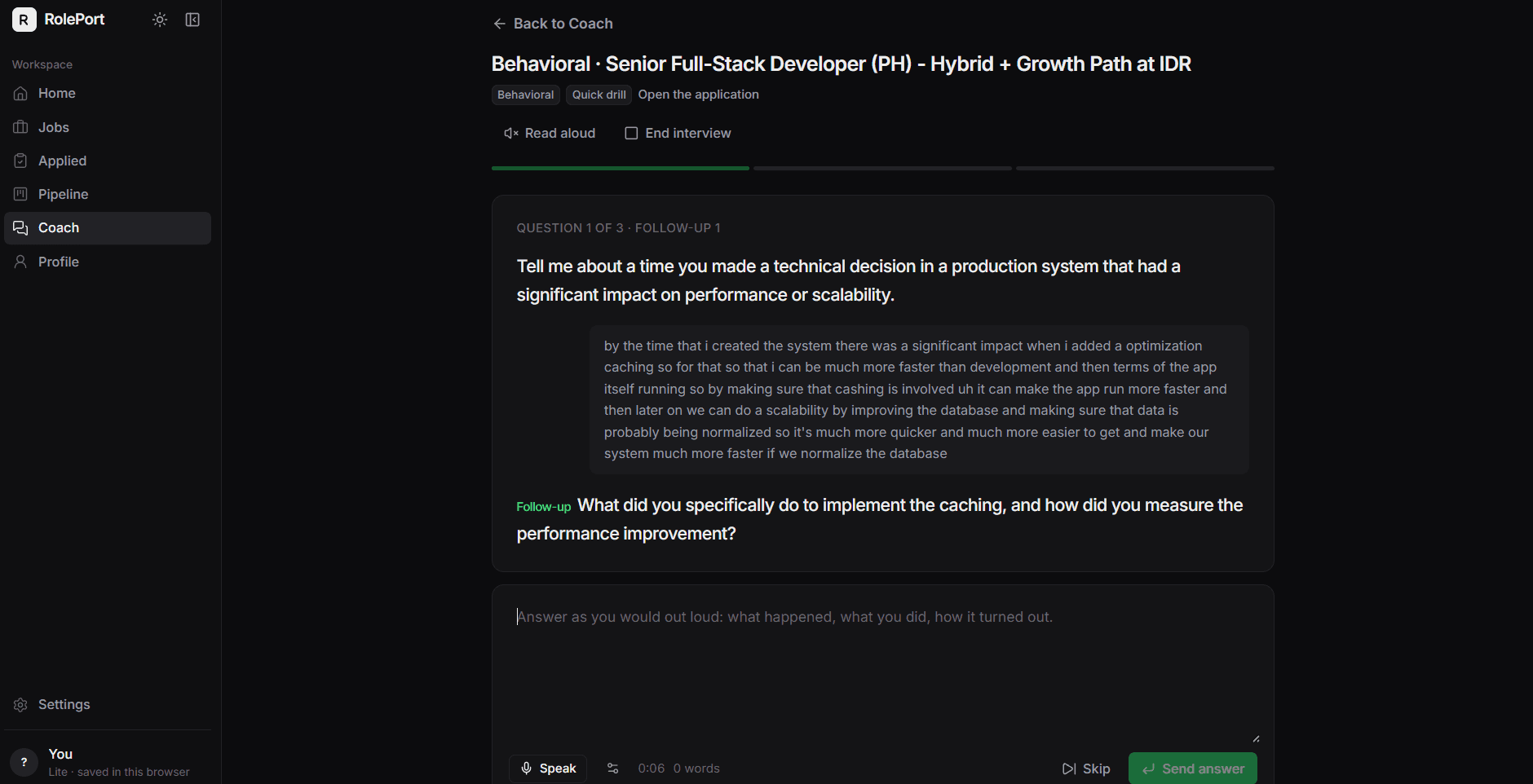
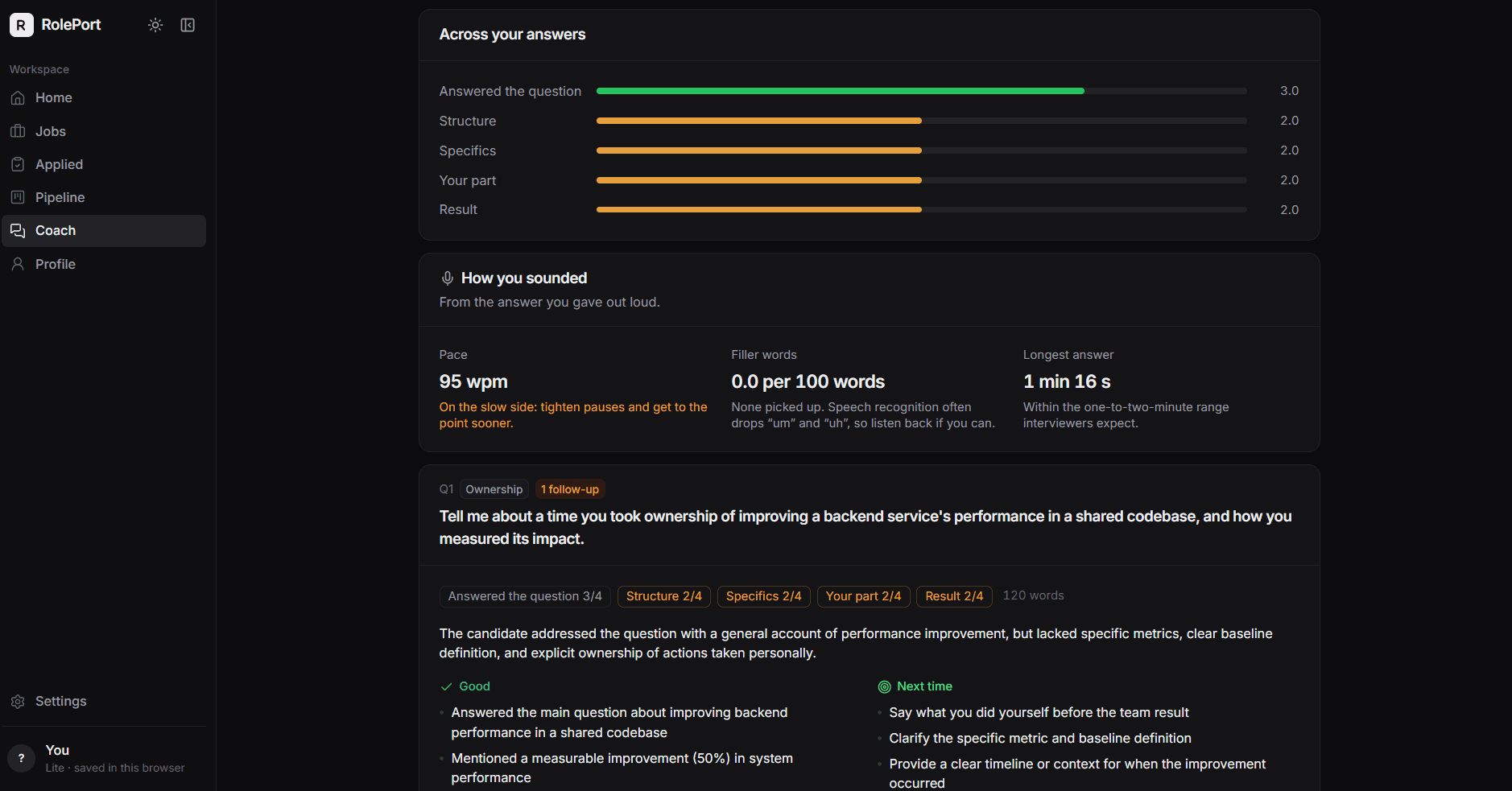
- 02Interview Coach with interviewer styles, a two-person panel, rubric scores and a cheat sheet
- 03Consistency flags when an answer contradicts the CV or letter you sent, with both sides quoted
- 04Voice answers with an opt-in, on-device Whisper model that keeps audio on your device
04 / Engineering
Check the model in code instead of trusting it.
Small local models (around 12B) often get verdicts wrong, so every AI feature is designed to work on them. Prompts are paired with code-side validation: any quote the model cites must actually appear in the source text, and facts on a CV come from the profile, not the model.
The same features run on a server-backed Postgres install or entirely in the browser with WASM Postgres, and users can move between them with a backup file. Nothing large downloads without an itemized list and the user's yes, and when one job board blocks or rate-limits, results from the others still come through.
05 / What's next
Closing the loop after you apply.
Next up are follow-up reminders and outcome tracking, skill-gap insights, an optional browser extension that autofills application forms (you still review and submit), and a desktop app with JobSpy built in.